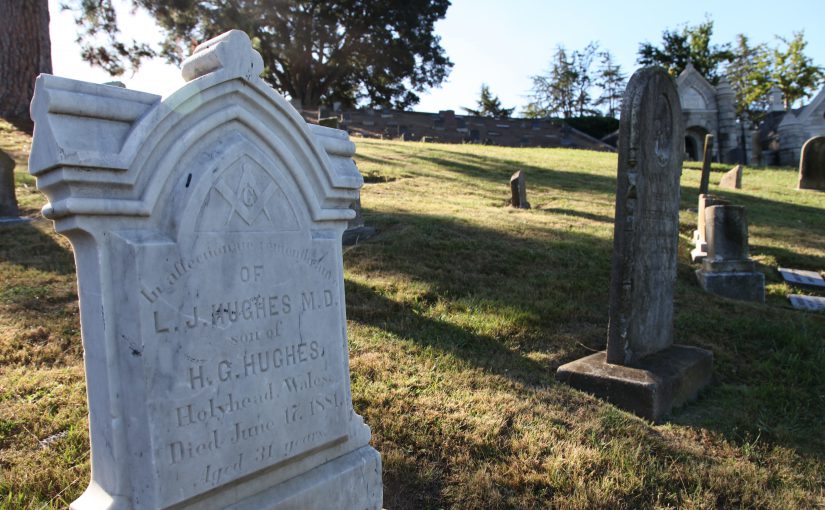
How did a 19th century Masonic tombstone from Piedmont find its way to the side of the road in Stanislaus County, 100 miles away? That’s exactly what members of Oak Summit Lodge No. 112 set out to discover—and to lay a long-lost brother to rest.
Read more about lodges in the the California’s Mother Lode in the newest issue of California Freemason at californiafreemason.org/ripfinally
Check out the digital issue on our newly redesigned home page, californiafreemason.org. And search for your favorite topics, peruse past issues, and find the latest news from the fraternity all in one convenient place.
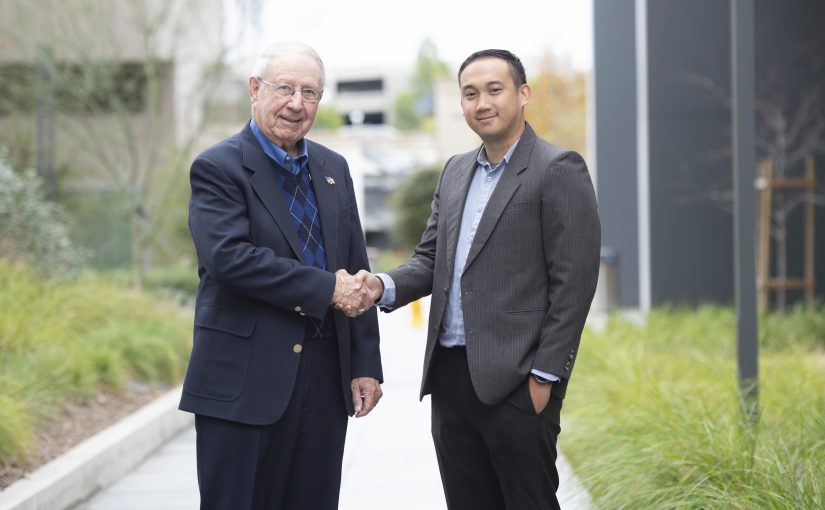
DeMolay provides early exposure to positive values and life skills. Masonry is its natural continuation, giving young men an opportunity to put into practice the values they have learned. Two Senior DeMolays and current Masons exemplify the teachings that both organizations impart.
GLENN WOODY RYAN TONDARES
80 years old 25 years old
DeMolay since 1952 DeMolay since 2008
58 years as a Mason Four years as a Mason
How old were you when you became a DeMolay and what chapter did you join?
Glenn: “I was 14 years old, and at the time, that was earliest age you could sign up. I belonged to the E.Y. Lee Chapter in Lubbock, Texas. ”
Ryan: “I was 12 years old. My uncle’s sons were in DeMolay, as were two of my best friends. I belonged to the Walt Disney Chapter in Anaheim, California.”
Did you serve in any leadership positions?
Glenn: “Did you serve in any leadership positions? I took to DeMolay like a duck to water. I was active until I was 21 years old. I served as master councilor of my chapter and was then elected to area master councilor, then state master councilor. I was a member of the DeMolay International Supreme Council for a number of years. ”
Ryan: “I served in high school as chapter master councilor. My first year of college, I was the illustrious knight commander of Saint Bernard Priory, where I assisted the Southern California jurisdiction of DeMolay.”
What did you learn in DeMolay?
Glenn: “It was rewarding to learn about leadership, organization, planning skills, and mentorship. I gained great experience that enhanced my public speaking skills for the rest of my life. I believe most of the doors of opportunity that opened for me were a result of things I was exposed to early on in DeMolay.”
Ryan: “My DeMolay events were funded by our jurisdiction or chapter, so we all worked together to pay for our events. I learned planning, budgeting, finance, and preparation. I also learned a lot about leadership and responsibility, and it gave me little steps toward maturity. It was rewarding to gain the skills for becoming an adult. I always wanted to be a businessman, and those precepts instilled values to remain polite, and not do things that would tarnish my reputation.”
How important are your DeMolay and Masonic friendships?
Glenn: “In my 40s, I was sitting on a balcony in a beautiful hotel in Hawaii and I began to think about my life. I wrote down the names of the people who had been instrumental. It was my mother, my father, who became a Mason during the time I was in DeMolay, and five other men who were mentors and advisors to me early in DeMolay. The point is that, except for my mother, they were all Masons. DeMolay and Masonry created lifelong friendships.”
Ryan: “Masonry follows DeMolay, especially with brotherhood and the degrees. My brother and my dad were a part of my degrees. The lodge feels like a family. The events that we do are fun, but we also give back to the community. I’ve learned that giving back is spiritually rewarding.”
If you could tell other men one thing about DeMolay and Masonry, what would it be?
Glenn: “It is the leading place to be exposed to positive values and be given the opportunity to practice them and develop them in your own life. Some people reach an age at which they wonder if they’ve made a difference. Advisors for the Masonic youth groups, DeMolay, Jobs Daughters and Rainbow for Girls don’t ever have to ask that question.”
Ryan: “Honestly, it’s a group that pushes you and reminds you to do good and be a better person by following lessons learned in the degrees and in the rights of joining Masonry and DeMolay. Young men grow through DeMolay to do good and be better young men.”
Adult leaders are critical to the overall success and survival of a youth order.
DeMolay International, Job’s Daughters International, and the International Order of Rainbow for Girls rely on lodges and adult leaders for support and mentoring. The role of an advisor is fulfilling and rewarding – and one that is vital today for the future of Masonry.
If you are interested in getting involved, visit the Masons4Youth website to learn more about the opportunities available.
California masons’ partnership with raising a reader has brought crucial literacy training to nearly 600 classrooms – and we’re not close to done yet!
Every day in underresourced public school classrooms throughout California, young children are struggling to read. The majority – up to 95 percent – don’t have a single book at home. For these children, the letters on the page seem foreign; what they represent is opaque. And if the children can’t achieve literacy by third grade, their chances for educational success are grim. When compared to their peers who are academically on track, impoverished children who cannot read at grade level by third grade are 13 times less likely to graduate from high school.
These alarming statistics are at the crux of the California Masonic Foundation’s partnership with Raising A Reader (RAR), a nationally recognized leader in early childhood literacy. RAR provides children with high-quality books, teaches their parents the importance of reading at home – and how to begin – and connects families with local public libraries for a lifetime of learning.
RAR works. In the 448 California classrooms that have benefitted from our partnership so far, educators have seen dramatic improvements in test scores, comprehension, and family engagement. Our RAR schools have 42 percent more students reading at grade level than those without the program – after participating just a single year.
Deborah Hoffman, a Head Start teacher who works with RAR families in the Coachella Valley, has seen this impact first hand. “When I have done home visits I have found that there’s a great need for books in the homes. With technology now, you don’t see a lot of books,” she says in a recent interview with CBS News. “This is a fabulous program.”
Recent research by United Way of the Desert corroborates her praise, noting that RAR has been able to successfully impact the region’s most economically disadvantaged students.
“I’ve had kids come back to me two or three years later and they’ll say, ‘Ms. Hoffman, I remember that book, when we read ‘Chicka Chicka Boom Boom.’ It’s like wow, I really made a difference. They remember reading those books.”
Perhaps Sabrina Hijazi, mother of an RAR student says it best: “Without reading you don’t have anything else to begin with. It’s fundamental and a building block to anything.”
California Masons are making a profound difference in the lives of families who need us most. And, by working together, we are capable of reaching so many more.
Watch a video about Raising A Reader’s impact in the Coachella Valley.
A NEW LODGE IN SOUTHERN CALIFORNIA BLENDS A RICH CULTURAL HERITAGE WITH LOVE FOR COMMUNITY
By Drea Muldavin-Roemer
When called for an interview, Alfred Isagulyan of Raven’s Rock Lodge, U.D. is walking up the stairs. His energy is palpable. He explains that he is out of breath from the incline, yes, but also because he is so excited to talk about his lodge. Raven’s Rock Lodge, which is currently under constitution, opened its doors on June 10, 2017. It has since been busy producing local events that revolve around education and the arts, aiming to lift the community while staying true to Masonic tenets and traditions.
“It’s all in the name of Masonry,” says Isagulyan, who is the current lodge secretary. He explains that one of the main reasons for forming this lodge was to bring the fire back to the community, creating sparks of positivity that would effect far-reaching change on a local level, as well as in the world beyond. “We wanted to start creating action to benefit society more,” he says. “We’ve been very passive lately… as a society, and within Masonry.” Fellow members echo Isagulyan’s passion and commitment. They agree that Masonry has made them better men and they hope to see the lodge better their community.
The idea of Raven’s Rock Lodge came about when Isagulyan sat down to lunch with his good friend Jordan Yelinek, a fellow Freemason. Right then a spark was ignited. “It was exciting just knowing we could go through the steps and create something beautiful,” Isagulyan says. “A big light opened up in my mind.” The idea of building a lodge that was totally new, from the ground up, was too energizing to ignore, so he went back to his close friends (all fellow Freemasons) and asked if they wanted to form a lodge together, grounded in their existing relationships with Masonry and each other. “Our approach in Masonry is not about titles or positions,” he says. “In the end, we are friends that are trying to create this change and keep this fire in the community. We are channeling our energy now in our lives, and we have a lot of it.”
Though the idea of the lodge came about naturally and the brothers’ roots are firmly planted, building this lodge has been a huge undertaking for the friends. “In creating the lodge, we learned more about Masonry. Welearned how things get created and the energy that requires,” Isagulyan says. “It has been a rollercoaster ride of feelings. We have felt at times like, ‘Are we doing this right?’ But then we see our work in action and we feel it in action!”
One way that the brothers have been able to see and feel the impact of their work is through their immediate community of friends, family, and local public schools. Raven’s Rock Lodge is predominantly Armenian, which is more a matter of location than intention. Most of its members live in Glendale, a city with one of the largest populations of people of Armenian descent in the United States. The lodge welcomes people of all ethnic, cultural, and religious backgrounds. Its international and local membership includes brothers who maintain memberships in other lodges, as well. Without negating the benefits of such diversity, having so many members living in the same city is a strong suit; it makes it easy for brothers to witness their efforts at the end of the day.
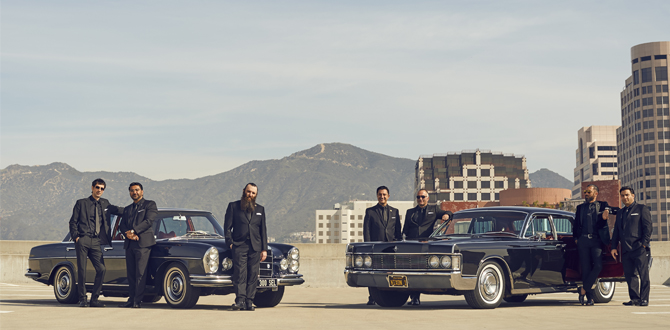
The lodge helps members stay engaged by combining their personal and charitable interests. For instance, because several of the lodge’s members are proud classic car owners, they will host a car show in May from which all proceeds will benefit a local elementary school. If all goes well, they plan to hold similar events at other schools in the future. “We’re trying to keep it fun while benefitting our community,” Isagulyan says.
Last October they included their Armenian heritage in this approach, producing a cultural performance, “Khachaturian on Brand.” At this free event, open to the public, a string quartet played the songs of the late Armenian composer Aram Khachaturian while a local ballet danced to the music. “Khachaturian on Brand” was a local success, and was even covered by the Armenian media. It will now be an annual event. It was such an undertaking that beforehand the lodge worried about being able to pull it off. But, the lodge came together and made it happen. Their success reinvigorated their motivation to do more.
In addition to local events, Raven’s Rock Lodge has done work abroad. They recently planted 70 trees in Armenia, which will someday become a Masonic garden. This act is emblematic of the lodge’s overall intentions: to plant seeds and encourage growth, all over the world. Through the tenets of traditional Masonry, working both locally and internationally, Raven’s Rock Lodge has a long vision and a broad scope. “We’re trying to think big,” Isagulyan says. “We’re trying to make a real impact.”
If you’ve been seeking an excuse to see the country, there’s no better time than the present. The lens of Freemasonry offers a fascinating perspective!
GEORGE WASHINGTON MASONIC NATIONAL MEMORIAL
Alexandria, Virginia
Come for the Masonic history and incredible architecture, stay for the amazing view. Brother Harvey Wiley Corbett, the building’s architect, drew upon the Lighthouse of Alexandria in Egypt, one of the Ancient Seven Wonders of the World, as his inspiration.
In addition to employing many Greco-Roman architectural styles, the building includes Replica Lodge Room – duplicating the design of Alexandria Lodge No. 22’s first permanent lodge room built in 1801. Preservation of this stunning Masonic building is funded by Masons around the United States (a donation to the memorial is included in California Masons’ per capita).
gwmemorial.org
THE HOUSE OF THE TEMPLE
Washington, District of Columbia
Located in our nation’s capital, the House of the Temple is the headquarters of the Supreme Council, 33°, Scottish Rite of Freemasonry, Southern Jurisdiction, USA. Modeled after the famous Mausoleum at Halicarnassus, in Turkey – recognized as one of the Seven Wonders of the Ancient World – the House of the Temple has been open to the public since its 1915 construction.
Take an awe-inspiring tour of John Russell Pope’s breathtaking architecture, including the two 17-ton sphinxes that adorn the building’s entrance and the magnificent dome ceiling of the Temple Room, which soars 100 feet above the altar. You’ll also be dazzled by a good amount of Masonic memorabilia in the mini-exhibits throughout the interior.
Foodies and historians unite in Manhattan’s Flatiron District, where you can take in the beautiful turn-of-the-century Masonic architecture alongside food trucks and high-end cuisine alike.
This impressive Masonic temple was built in 1873 and serves as the meeting place of the Grand Lodge of New York. Among its 15 immaculately restored event spaces are the fresco-embellished Renaissance Room and star-adorned Gothic Room. Its 14th floor houses the Chancellor Robert R. Livingston Library and Museum, which includes more than 60,000 volumes detailing Masonic history, philosophy, and symbolism.
A visit to the City of Brotherly Love isn’t complete without a visit to the Grand Lodge of Pennsylvania. Considered to be one of the most beautiful Masonicbuildings in the world, the temple that houses the Grand Lodge of Pennsylvania boasts stunning rooms based on themes of the ancient architectural world, including Egyptian, Moorish, and Corinthian rooms.
Constructed in 1873, it is filled with intricate ornamentation representing Masonic philosophy, symbolism, values, and history. Its museum counts among its many treasures the Masonic apron worn by United States President George Washington in the 18th century. Take a selfie with the bigger-than-life bronze statues of George Washington and Benjamin Franklin in front of the building.
Built in 1912, this pink Moorish-style building includes a mural of King Ferdinand and Queen Isabella accepting the surrender of Boabdil, the last Islamic ruler of Granada, Spain, in 1492.It was listed with the National Register of Historic Places in 1987.
You can’t miss it – its architecture and interior garden sets it apart from its surroundings. Cool down from the hot sun with a tour of the lovely Alhambra Theater and more.
Follow this simple checklist to make sure your trip is on the level.
Contact Member Services: Well in advance of your journey, contact Grand Lodge Member Services at (415) 292-9180 or memberservices@freemason.org. Share your dates and the places you’d like to visit. Member Services will confirm that our jurisdictions share recognition, handle initial communications on your behalf, and let you know which lodge to visit (if you haven’t already researched and specified one).
Obtain your letter of introduction: Member Services will send an official letter of introduction to you and to the grand lodge you would like to visit.
Pack your current California dues card: Be prepared to display your current dues card upon arrival.
Pack universal attire Unless you are certain that the lodge you will visit follows casual dress, you should prepare to wear a dark suit and tie, white gloves, and apron.
Arrive early for the examination: Give yourself at least 30 minutes before the stated meeting to present your credentials and take the oral exam to confirm your membership (usually conducted by three brothers).
Follow the ritual as you know it: Although ritual can vary between jurisdictions, it’s best to follow that of your home lodge to ensure the least disturbance to your hosts. Afterwards, you can discuss any differences.
Dust off those gloves and get ready to knock one out of the park for your team: The 2018 Masons4Mitts season is now underway!
California Masons are once again stepping up to the plate in support of local kids. Every $20 gift puts a high-quality leather baseball mitt – embossed with the Masons of California logo – into the hands of a child in need.
Welcoming Angels Baseball
The California Masonic Foundation is excited to welcome our newest Masons4Mitts partner team: Angels Baseball. Through a special partnership with the Angels Baseball Foundation, children in the greater Anaheim region can now count on California Masons for a chance to play ball and lead healthier lives.
Mark Your Calendar for Masons Nights!
As in previous years, the team from each region that raises the greatest number of mitts will present their check publicly, along with Grand Master Galloway, at Masons Night in each stadium! All Masons are encouraged to attend these fun-filled evenings of baseball and fellowship to show our support of local communities and kids. There’s never been a more fun opportunity to see yourself and your brothers on the Jumbotron!
Anaheim – New!
August 28, 2018 at 7:07 p.m.
Angels Baseball vs. Colorado Rockies
Los Angeles
September 17, 2018 at 7:10 p.m.
Los Angels Dodgers vs. Colorado Rockies
San Diego
September 18, 2018 at 7:10 p.m.
San Diego Padres vs. San Francisco Giants
San Francisco
September 25 at 7:15 p.m.
San Francisco Giants vs. San Diego Padres
Share the fun! Spread the word about Masons4Mitts to your brothers, family, friends and community: masons4mitts.org.
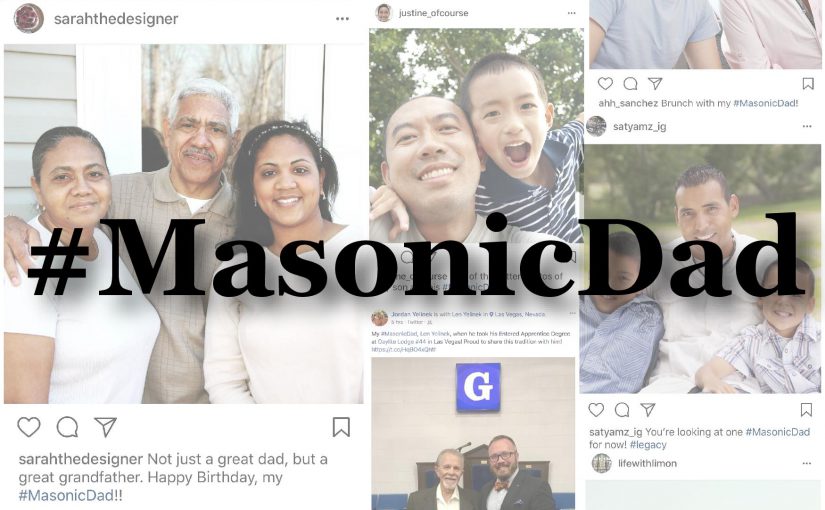
California Freemason is launching a new hashtag campaign – #MasonicDad – to correspond with our July/August issue, which will focus on the theme of “Freemasonry and Fatherhood.”
To participate, show us what Masonic fatherhood means to you! Share a photo of yourself with:
Your father, stepfather, or another childhood role model (Masonic or non) who helped shape you as the Mason you are today
A Mason who has been a role model for you
Someone for whom you feel fraternal affection (your own child, a child or Masonic youth you’ve mentored, or a Mason you’ve mentored)
These photos can be casual or formal, from any stage of life. Please share something that makes you smile! Be sure to include a caption explaining who is pictured.
Once you’ve chosen a photo, please share it with us in one of three ways:
Option 1: Post on Instagram
Post your picture on your public Instagram, tag @masonsofca and use the hashtag #masonicdad
Option 2: Post on Facebook
Post a public picture on Facebook, tag Masons of California, and include the hashtag #masonicdad
Option 3: Email us
Email your photo to communications@freemason.org along with your name, lodge name, and caption.
Thank you for helping us share the stories of California Masonry!
The California Masonic Symposium has been a tradition of our Grand Lodge since 2001, when more than 100 members and ladies attended the inaugural conference – making it one of the largest Masonic education events in recent history. After just one year, attendance rose by 50 percent, and by 2009, registration had grown to 350 participants. The Symposium’s location rotated between Northern and Southern California until 2012, when it was held for the first time in both San Francisco and Pasadena.
Today, the California Masonic Symposium enjoys a prestigious reputation amongst scholars of Freemasonry worldwide. Each year, it presents a topic of historical and philosophical relevance to California Masons.
California’s Masonic Pioneers
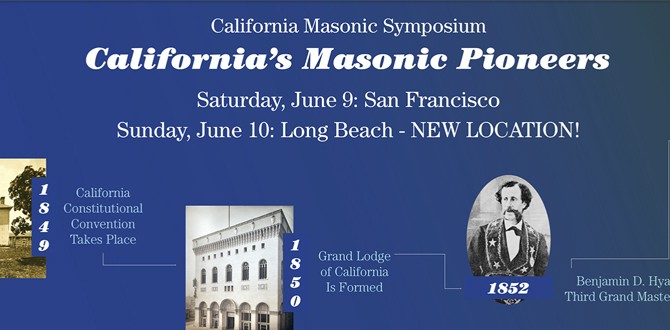
The 2018 Symposium – taking place June 9 in San Francisco and June 10 in Long Beach – will explore the fraternity’s whirlwind arrival in California, and the daring brothers who led the way.
Esteemed scholars of California Masonry will explore this fascinating period in our state’s history.
Past Grand Master John L. Cooper III, Ph.D.
Past Grand Master R. Stephen Doan, J.D.
Adam Kendall, past president of the Masonic Library and Museum Association
Brian Bezner, M.A., Masonic Education Committee chairman
Registration is just $20 for this all-day event. For an additional $15, add a catered lunch.
Share this story with your lodge! All freemason.org articles may be repurposed by any Masonic publication with credit to the Grand Lodge of California and the author. Print this article and post it at lodge; include it in your Trestleboard or website; email it to members; or use the buttons at the top of this page to share it on Facebook or Twitter.
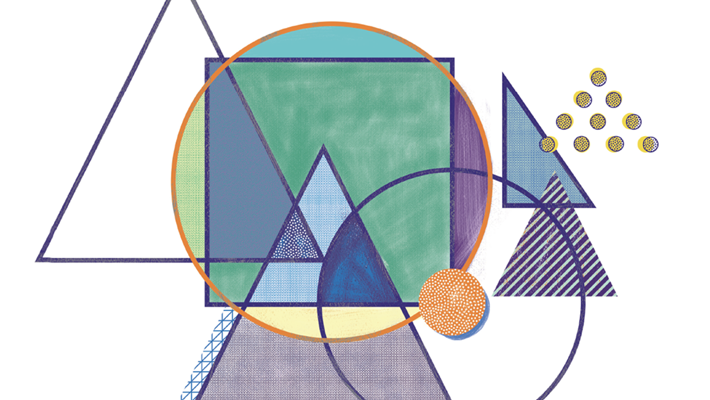
The term “sacred geometry” can be somewhat intimidating: How might geometry be sacred, one might wonder. And, how does Masonry fit in?
The core concept of sacred geometry is that geometric order (shapes, curves, and constructs) precedes all physical existence – that geometry was invented by the Great Architect of the Universe as a structure through which to order all of creation. Under this tradition, its symbols take on metaphysical and symbolic meanings. “Geometry, or Masonry, originally synonymous terms, is of a divine and moral nature,” wrote William Preston, a seminal figure in 18th century British Freemasonry. “The contemplation of this science in a moral and comprehensive view, fills the mind with rapture…[and] proves the existence of a first cause.”
For some, all of geometry is sacred. At the other extreme, sacred geometry may be regarded as a system of fixed symbols and their relationships. As a coherent system, the origins of sacred geometry in Western civilization can be traced to the sixth century BCE philosophical school of Pythagoras. The historical Pythagoras is essentially a cipher, as there are no contemporary accounts of his philosophy. His extensive legend, however, along with the writings of Plato, Aristotle, and his other followers, was transmitted through the centuries and had a direct influence on the development of speculative Freemasonry.
“By Geometry we may curiously trace nature through her various windings to her most concealed recesses. By it we discover the power, wisdom and goodness of the Great Artificer of the Universe …”
Like Freemasonry, sacred geometry appeals to both the rational and creative mind. While geometric proof is relentlessly logical, the truths it conveys and patterns it reveals within the natural world urge its scholars to contemplate their place in God’s cosmos.
Many sacred geometric applications and symbols are familiar to Masons. First is the circumpoint, the point within a circle: In Masonry, the point represents an individual, and the circle, the limits of his behavior. In sacred geometry, this symbol is called the monad, which represented divinity and the unity of the universe to Pythagoras.
The standalone circle, being without end, symbolizes divinity and heaven. It is created using a compass and defined by three points. These points can be interpreted as the three principal tenets of Freemasonry – brotherly love, relief, and truth (the last of which is often described as “a divine attribute”). As a divine symbol, these points can also be interpreted to correspond with St. Paul’s theological virtues of faith, hope, and charity. These virtues are said to originate in God, and they are evoked in the celestial first-degree description of the covering of a lodge as heaven itself.
The circle’s complement is the square. Bound by four finite sides, it represents the limits of the physical world and our mortal existence. In Masonry, the square represents the perfect ashlar – a perfectly shaped square block without faults that is strong and steadfast, capable of supporting the blocks around it. Masons work to emulate this square; to be men of good character who are honest and reliable members of our communities. The square is reflected in the shape of the lodge room. The room’s sides correspond to the four cardinal points of the compass, and thus to a map of the Earth. It contains the four cardinal virtues adapted from Plato’s “Republic” which originate in man – temperance, fortitude, prudence, and justice.
A slightly more complex symbol is the Pythagorean tetractys, an equilateral triangle formed by 10 dots, which has a prominent role in the Scottish Rite:
This has many symbolic meanings, but an important one is perfection, or completeness, derived from the symbolic significance of the number 10.
The 3: 4: 5 right triangle, which displays the 47th Problem of Euclid as explained in the third degree, “teaches Masons to be general lovers of the arts and sciences.” Operative masons used a length of rope divided into 12 equal segments (three plus four plus five) to make this triangle. It provided them with a swift and accurate method of creating a right angle, to be used as a template for the Mason’s square.
Sacred geometric symbolism, which can be very complex, is only touched on lightly in the three degrees. Its most prominent place is in the second degree, where the candidate is urged to study the liberal arts and sciences, “especially of the noble science of Geometry.” As with all profound Masonic lessons, the instruction conveyed in the ritual is the beginning of wisdom to be discovered on this subject, not its culmination: There are profound depths ready to be plumbed.
The study of sacred geometry is a means by which “to view with reverence and admiration the glorious works of the Creation,” and to inspire a Mason “with the most exalted ideas of the perfections of his Divine Creator.” Although one understanding of sacred geometry is that its forms are divine manifestations in the natural world, one must take time to scrutinize the natural world in order to deduce them and marvel at their presence.
Preston wrote with lyrical awe on the beautiful geometry in nature, from the most elegant seashell and flower to the vastness of space. As he professed, in words forever enshrined in Masonry,
“By Geometry we may curiously trace nature through her various windings to her most concealed recesses. By it we discover the power, wisdom, and goodness of the Great Artificer of the Universe… A survey of nature, and the observation of her beautiful proportions, first determined man to imitate the Divine plan, and to study symmetry and order.”
This is the true objective of sacred geometry and its symbols: Finding further light within Masonry.



 “It’s all in the name of Masonry,” says Isagulyan, who is the current lodge secretary. He explains that one of the main reasons for forming this lodge was to bring the fire back to the community, creating sparks of positivity that would effect far-reaching change on a local level, as well as in the world beyond. “We wanted to start creating action to benefit society more,” he says. “We’ve been very passive lately… as a society, and within Masonry.” Fellow members echo Isagulyan’s passion and commitment. They agree that Masonry has made them better men and they hope to see the lodge better their community.
 One way that the brothers have been able to see and feel the impact of their work is through their immediate community of friends, family, and local public schools. Raven’s Rock Lodge is predominantly Armenian, which is more a matter of location than intention. Most of its members live in Glendale, a city with one of the largest populations of people of Armenian descent in the United States. The lodge welcomes people of all ethnic, cultural, and religious backgrounds. Its international and local membership includes brothers who maintain memberships in other lodges, as well. Without negating the benefits of such diversity, having so many members living in the same city is a strong suit; it makes it easy for brothers to witness their efforts at the end of the day.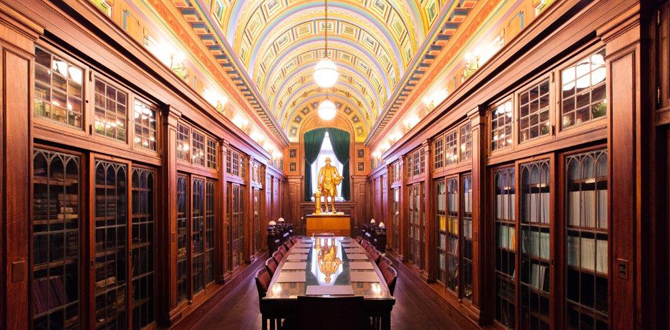

 Take an awe-inspiring tour of John Russell Pope’s breathtaking architecture, including the two 17-ton sphinxes that adorn the building’s entrance and the magnificent dome ceiling of the Temple Room, which soars 100 feet above the altar. You’ll also be dazzled by a good amount of Masonic memorabilia in the mini-exhibits throughout the interior.
 This impressive Masonic temple was built in 1873 and serves as the meeting place of the Grand Lodge of New York. Among its 15 immaculately restored event spaces are the fresco-embellished Renaissance Room and star-adorned Gothic Room. Its 14th floor houses the Chancellor Robert R. Livingston Library and Museum, which includes more than 60,000 volumes detailing Masonic history, philosophy, and symbolism.
 Constructed in 1873, it is filled with intricate ornamentation representing Masonic philosophy, symbolism, values, and history. Its museum counts among its many treasures the Masonic apron worn by United States President George Washington in the 18th century. Take a selfie with the bigger-than-life bronze statues of George Washington and Benjamin Franklin in front of the building.
 You can’t miss it – its architecture and interior garden sets it apart from its surroundings. Cool down from the hot sun with a tour of the lovely Alhambra Theater and more.